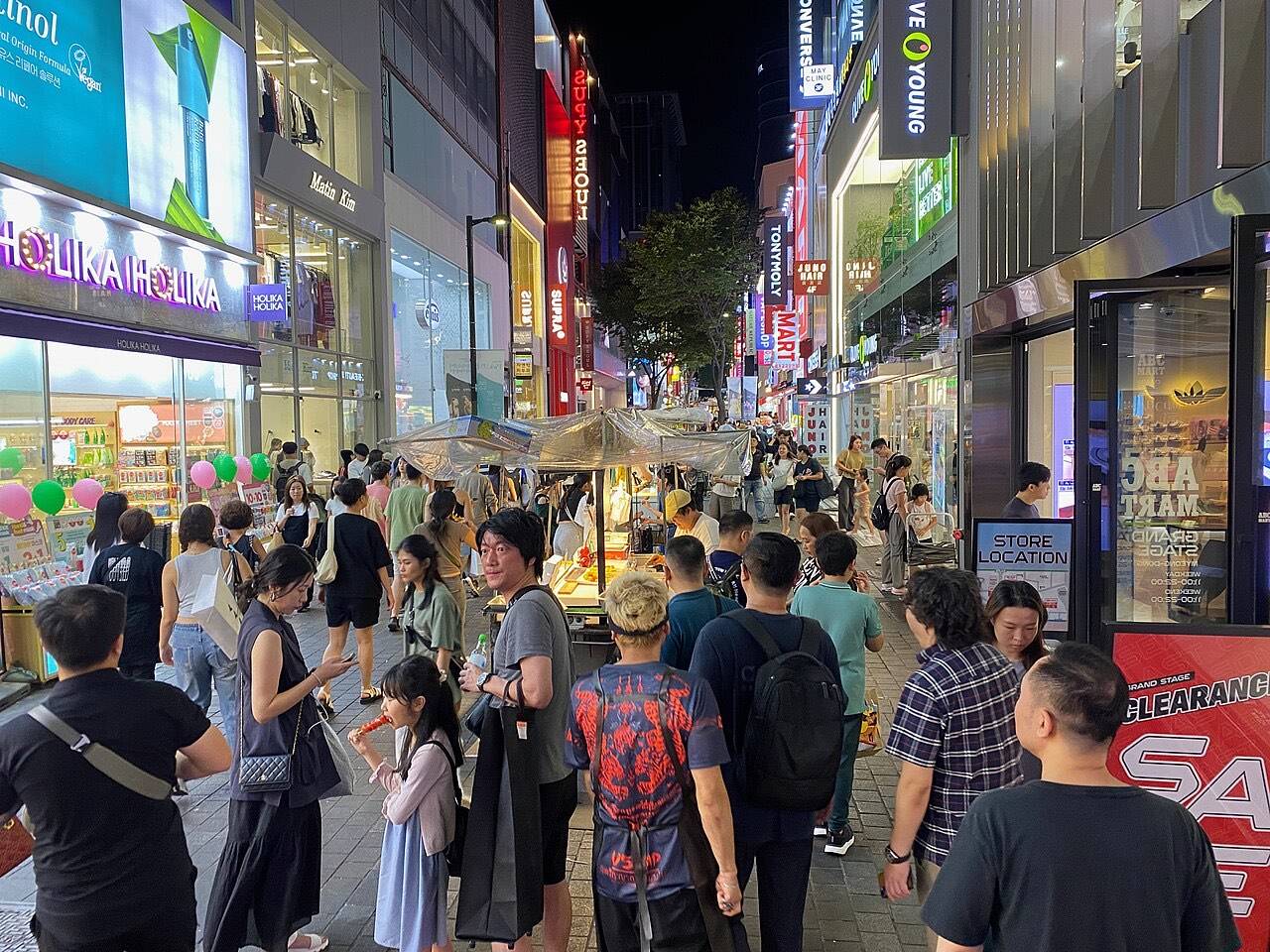
Korean street food is cheap, fast, and the easiest, most fun way to eat your way through a city. You don't need a reservation, a big budget or any Korean — most of it is grab-and-go, priced in small change, and eaten standing up. Here's what to look for, where to find it, and how to order.
The street food you have to try
Start with these. They turn up at markets and stalls all over the country:
- Tteokbokki — chewy rice cakes in a sweet-spicy red sauce, the national street snack. Often sold with fish cake and boiled egg.
- Hotteok — a fried, chewy pancake filled with molten brown sugar and cinnamon (and, in Busan, seeds and nuts). A cold-weather favorite.
- Eomuk / odeng — fish-cake skewers simmered in hot broth. The broth is usually free and very welcome in winter.
- Gimbap — seaweed rice rolls with vegetables and egg, the Korean packed lunch. Cheap, filling and everywhere.
- Twigim — Korean tempura: battered vegetables, squid and dumplings, often dipped in the tteokbokki sauce.
- Gyeran-ppang — a little sweet bread baked with a whole egg inside. Breakfast on the move.
- Bungeo-ppang — a fish-shaped waffle filled with red bean (or custard), a winter classic.
- Dak-kkochi — grilled, glazed chicken skewers, sweet or spicy.
Where to find it
Street food clusters in a few predictable places:
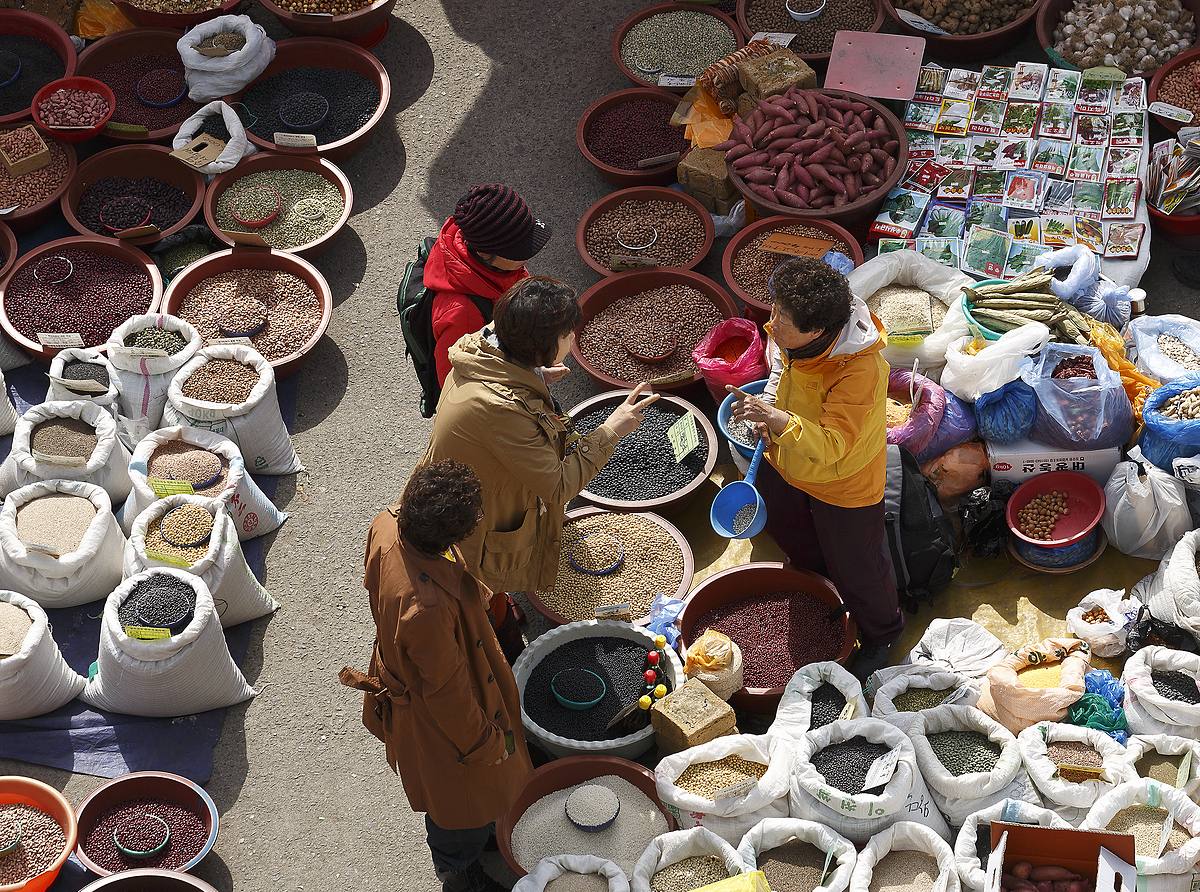
- Traditional markets are the best hunting ground, and every city south of Seoul has one. See our guide to Korea's markets beyond Seoul.
- Pojangmacha — the orange-tented street carts and tent bars that pop up in the evening, good for snacks and a drink.
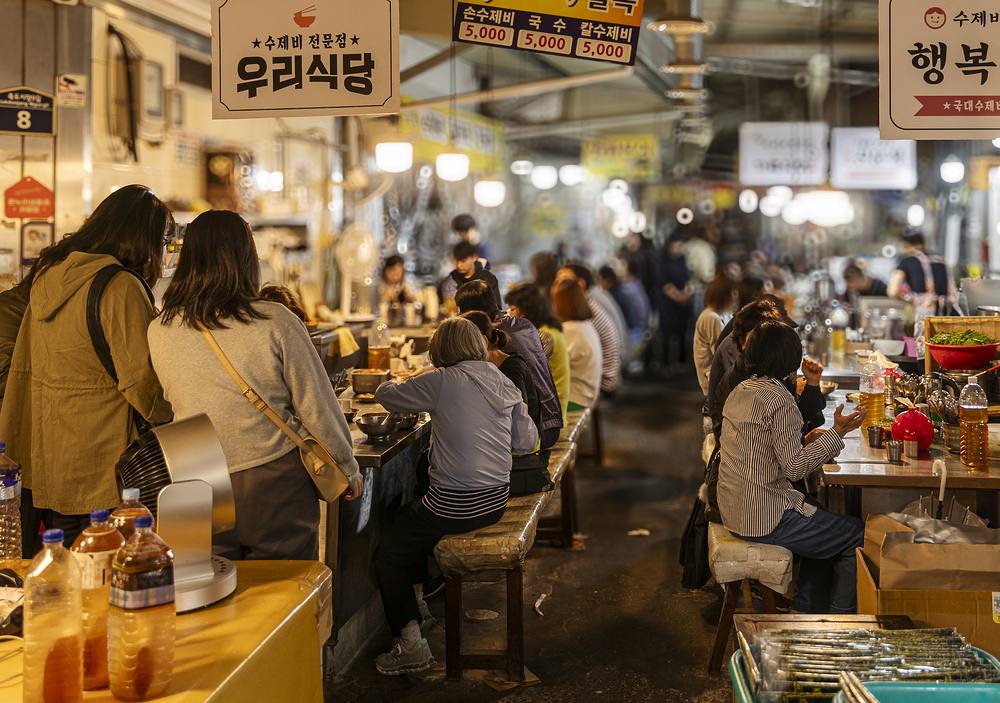
- Market food halls — many markets have a covered lane of stools where you sit and eat on the spot.
- Festival streets — during events like the Jinhae cherry blossom festival, the stalls line up for blocks.
Regional street snacks worth chasing
Some towns have a street snack they do better than anywhere:
- Busan — ssiat hotteok, the seed-stuffed version, from the stalls at BIFF Square. More on our Busan guide.
- Tongyeong — kkulppang, sweet fried honey bread.
- Gyeongju — hwangnam-ppang, thin-skinned red-bean pastry.
- Sokcho — dakgangjeong, crunchy sweet-and-spicy fried chicken from the market.
How to order and eat it
Street food is the most beginner-friendly eating in Korea:
- Point and pay. No Korean needed; just point at what you want and hold up fingers for how many.
- Carry small cash. Many stalls take cards now, but small bills and coins are still handy.
- Eat where you buy. Most snacks are meant to be eaten on the spot, standing at the stall.
- Mind the spice. Tteokbokki and some sauces run hot; say "an maewoyo" (not spicy) if you need it milder, though the recipe is usually fixed.
- Pojangmacha etiquette — at the tent bars, you sit, order a few dishes and a drink, and settle up at the end.
The move that never fails: at any market around lunchtime, find the stall with the longest local line and order whatever they're making. Popularity is the only review you need.
How to do it
- Head to the local market, ideally late morning or early evening when stalls are busiest.
- Graze, don't commit — buy one small thing at a time and keep moving.
- Try the town's specialty snack alongside the national staples.
- Take a food tour on your first stop if you'd like a local to translate and order for you.
A guided market or food tour is the easiest way in, especially in a city where you don't know which stall is the good one.
Book a market & street-food tour
Street food is where Korea is cheapest, friendliest and most fun to eat. Skip a sit-down meal now and then, hit the market, and graze your way through instead.