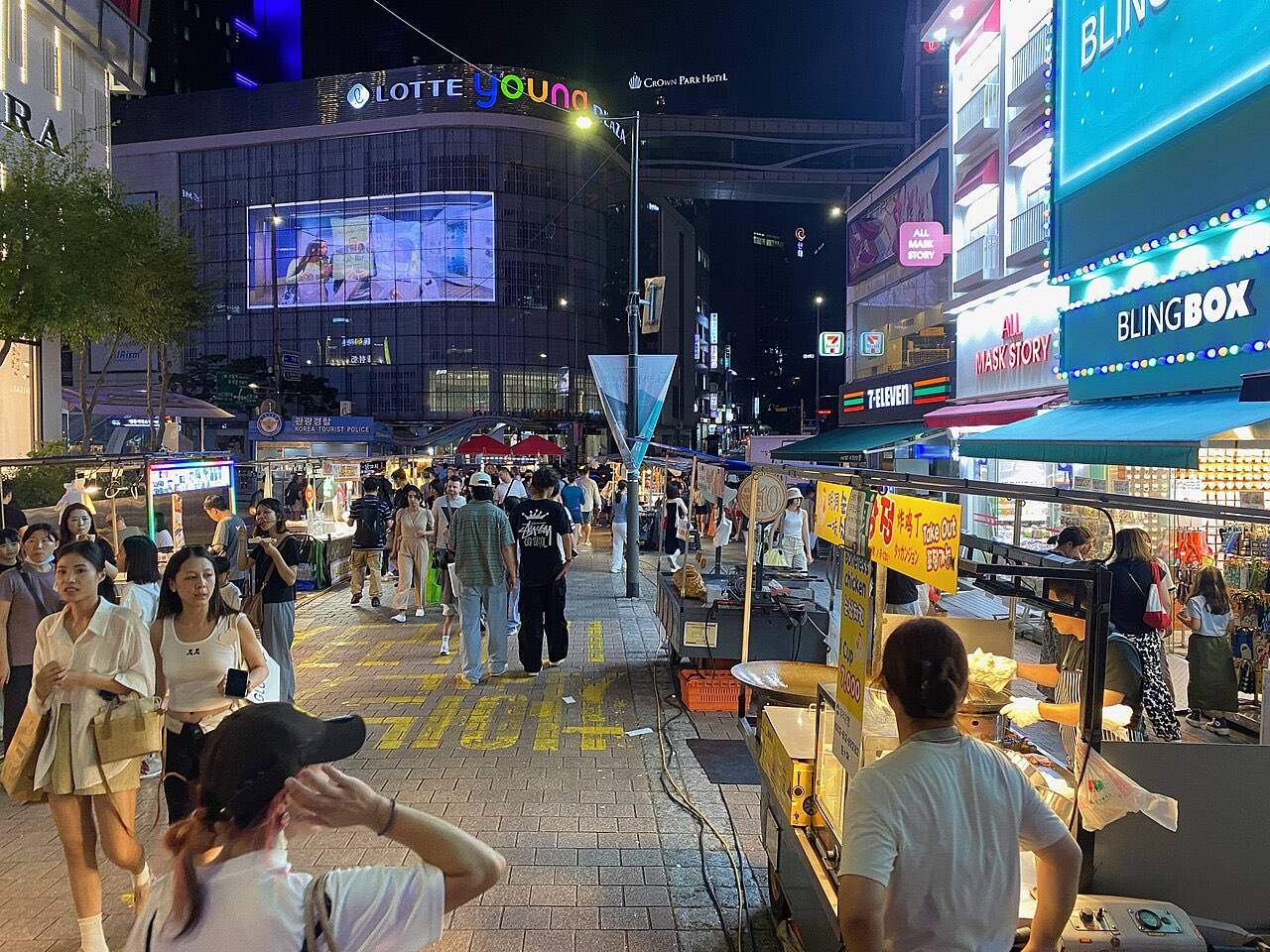
Bring one Visa or Mastercard for almost everything, carry a small amount of Korean won (around 50,000–100,000) for markets and street food, and buy a T-money transit card on your first day. Korea is overwhelmingly cashless and foreign cards work in most shops, restaurants and hotels. The main gotchas are some Korean websites and ticket machines that reject overseas cards — pay at a staffed counter when that happens. There's no tipping, and tourists can claim a tax refund on larger purchases.
Korea is one of the most cashless countries in the world, and knowing how to pay before you arrive removes most of the friction from a trip. Foreign Visa and Mastercard work in the vast majority of places, a tap-and-go transit card covers every subway and bus, and tipping simply isn't a thing. But a handful of situations still catch visitors out — rural stalls, some ticketing websites, a few older taxis. This guide covers exactly what to carry, which payment methods work where, and how to handle the gotchas.
What to bring: the short version
| Payment method | Use it for | Notes |
|---|---|---|
| Visa / Mastercard (contactless) | Most shops, restaurants, hotels, chain cafés | Accepted almost everywhere; tap-to-pay is standard |
| Cash (Korean won) | Markets, street food, small/rural vendors, temples | Carry ~50,000–100,000 ₩; top up at "Global" ATMs |
| T-money card | All subways and city buses, some taxis & convenience stores | Buy at any convenience store; the single most useful thing to get |
| Apple Pay / Google Pay | Growing number of terminals | Works at many but not all — don't rely on phone alone |
| Amex / Discover | Limited | Hit-or-miss; always have a Visa/Mastercard backup |
Cards work almost everywhere
In cities, tap-to-pay with an international Visa or Mastercard is the default and works in shops, restaurants, chain cafés, convenience stores, hotels and most taxis. You rarely need to sign or enter a PIN for small amounts. This is the backbone of paying in Korea — one contactless card handles the large majority of your spending.
A few things worth knowing:
- Amex and Discover are accepted in fewer places. If that's your only card, bring a Visa or Mastercard as backup.
- Apple Pay and Google Pay have expanded a lot and work at many terminals, but coverage still isn't universal. Treat the phone as a convenience, not your only method.
- Chip-and-PIN vs contactless: most terminals take contactless; where they don't, a chip card works fine. Tell your bank you're travelling so the card isn't blocked for "unusual activity."
- Dynamic currency conversion: if a terminal offers to charge you in your home currency instead of won, decline — paying in won almost always gives a better rate.
When you still need cash
Even in a cashless country, keep some Korean won on hand for the places cards don't reach:
- Small traditional markets (Gwangjang, Jagalchi) and many street-food stalls
- Some family-run restaurants and older neighborhood shops
- A few older taxis and rural buses
- Small temple entrance fees, local festivals, and street vendors
Around 50,000–100,000 won is plenty for most travelers at any one time. You can always top up.
Where to get won
- ATMs marked "Global" or "Foreign Card" accept overseas cards — you'll find them in convenience stores (CU, GS25, 7-Eleven), banks, and airports. Not every ATM takes foreign cards, so look for the label.
- Airport exchange counters at Incheon are convenient but not the best rate; withdraw a small amount on arrival and rely on ATMs or cards after.
- Avoid changing large amounts of cash — you likely won't spend it, and Korea is cashless enough that leftover won is a hassle.
Get a T-money card first
T-money is a rechargeable transit card that covers every subway and city bus nationwide, plus many convenience stores and some taxis. It's the single most useful thing to pick up after landing.
- Where to buy: any CU, GS25 or 7-Eleven, or a subway station machine. The card itself costs a few thousand won.
- How to load it: top up with cash at the counter or at station machines. You can't usually reload a T-money card with a foreign credit card, so keep a little cash for top-ups.
- How to use it: tap in when you board and tap out when you leave (buses and subway both). Fares are slightly cheaper than single tickets, and transfers between bus and subway are discounted when you tap consistently.
- Refunds: leftover balance can be refunded at convenience stores (minus a small fee), though many travelers keep the card for their next trip.
If you'd rather not deal with top-ups, some visitors buy a tourist transit pass instead. But for most people a plain T-money card is cheaper, simpler, and works literally everywhere public transport goes.
For the bigger picture on trains and intercity travel, see our guide to getting around Korea and KTX for foreigners.
The foreign-card gotcha (and how to beat it)
The single most common payment problem for visitors: some Korean websites, apps and ticket machines reject overseas cards or demand a Korean phone number or ID. This hits train booking sites, some attraction ticketing, and certain delivery apps.
What to do when it happens:
- Pay at a staffed counter instead of the machine or website — in-person card terminals almost always accept foreign cards.
- Use a foreigner-friendly booking platform (international travel sites and apps built for tourists) rather than the Korean-only portal.
- Don't assume it's sold out — a declined online payment usually means the site can't process your card, not that tickets are gone.
- Keep a cash backup for the rare machine that won't take your card at all.
This is the one area where a little planning pays off: book trains, passes and popular attractions in advance through a platform that accepts international cards, so you're not stuck at a machine that won't take yours.
Book passes & tickets with an international card
Tax refund for tourists
Short-term visitors can claim a tax refund (VAT) on qualifying purchases:
- Look for the "Tax Free" sign in shops and department stores.
- On purchases above a set minimum, you either get an immediate refund at the register (for smaller amounts) or claim it at a refund kiosk on your way out of the country.
- Refund kiosks are at Incheon and other international airports — allow extra time before your flight.
- Keep your receipts and passport; the refund is only for non-residents, and you may be asked to show the goods.
It's not worth stressing over for small buys, but on cosmetics, electronics or fashion it adds up.
Tipping isn't expected
Korea has no tipping culture. The price on the menu or the taxi meter is exactly what you pay. Staff won't expect — and may be confused by — a tip. A couple of exceptions:
- Some upscale hotels and restaurants add a service charge automatically; check the bill.
- Rounding up a taxi fare is fine but never required.
Don't feel awkward about not tipping — it's simply the norm here.
Budgeting: what things cost
A rough sense of prices (as of 2026) so you know how much cash to carry:
- Subway/bus ride: around 1,400–1,600 ₩ with T-money
- Convenience-store coffee or snack: 1,500–3,000 ₩
- Casual meal (kimbap, noodles): 5,000–9,000 ₩
- Sit-down restaurant main: 10,000–18,000 ₩
- Street-food snack: 2,000–5,000 ₩ (cash)
Most of this goes on a card; keep cash mainly for street food and markets.
How to pay in Korea: step by step
- Before you fly: tell your bank you're travelling, and make sure you have a contactless Visa or Mastercard.
- On arrival: withdraw a small amount of won (50,000–100,000) from a "Global" ATM at the airport.
- Day one: buy and load a T-money card at a convenience store for all local transport.
- Day to day: tap your card for almost everything; use cash at markets, street stalls and small vendors.
- For tickets & trains: book through a foreigner-friendly platform in advance to avoid card-rejection at Korean-only machines.
- Before you leave: claim your tax refund at the airport kiosk, and refund or keep your T-money balance.
Frequently asked questions
Can I use my credit card everywhere in Korea?
Almost — international Visa and Mastercard work in the large majority of shops, restaurants, hotels and taxis, and contactless tap-to-pay is standard. The main exceptions are small markets, street-food stalls, some rural vendors, and certain Korean ticketing websites that reject foreign cards. Carry a little cash for those.
Do I need cash in Korea?
Yes, a small amount. Korea is very cashless, but markets, street food, some family-run spots, older taxis and small temple fees are cash-only. Around 50,000–100,000 won on hand is plenty; top up at ATMs marked "Global" or "Foreign Card."
What is a T-money card and do I need one?
T-money is a rechargeable card that covers every subway and city bus in Korea, plus some taxis and convenience stores. It's the most useful thing to buy on arrival — get one at any CU, GS25 or 7-Eleven, load it with cash, and tap in and out. Fares are cheaper and transfers are discounted.
Why was my foreign card declined in Korea?
Usually it's not your bank — many Korean websites, apps and ticket machines can't process overseas cards or require a Korean phone number. Pay at a staffed counter or use a foreigner-friendly booking platform instead. A declined online payment rarely means the tickets are sold out.
Does Apple Pay or Google Pay work in Korea?
Increasingly, yes — Apple Pay and Google Pay work at a growing number of terminals, but coverage still isn't universal. Treat your phone as a convenience and always carry a physical Visa or Mastercard as backup.
Is tipping expected in Korea?
No. Korea has no tipping culture, and the price on the menu or meter is what you pay. Some upscale hotels and restaurants add a service charge automatically, but otherwise you're not expected to tip.
How do tourists get a tax refund in Korea?
Shop at stores with a "Tax Free" sign and spend above the minimum. You either get an instant refund at the register for smaller amounts or claim it at a refund kiosk at Incheon or another international airport when you leave. Keep your receipts and passport.
How much cash should I bring to Korea?
You don't need much. Withdraw around 50,000–100,000 won at a time from a Global ATM for markets, street food and small vendors, and put everything else on a card. Avoid exchanging large amounts of cash, since you likely won't spend it.
Get these basics sorted — one contactless card, a bit of cash, and a T-money card — and paying in Korea is genuinely effortless. The only thing worth planning ahead is booking trains and popular tickets through a platform that accepts international cards, so you're never stuck at a machine that won't take yours.