Suncheon Bay (순천만) is a vast coastal reed wetland on Korea's southwest coast, in South Jeolla province, and one of the largest and best-preserved on earth. Ask a Korean where to see reeds and cranes and they'll point you here; ask a first-time foreign visitor and you'll usually get a blank look, which is half the reason to go. It's a living tidal marsh of waving reeds, mudflats and migratory birds, and Korea's first national garden sits right next door. Together they make one of the most peaceful, photogenic days in the country, and most international tourists still miss it entirely.
What makes Suncheon Bay special
This is a working estuary where the river meets the sea, not a manicured park. What draws people:
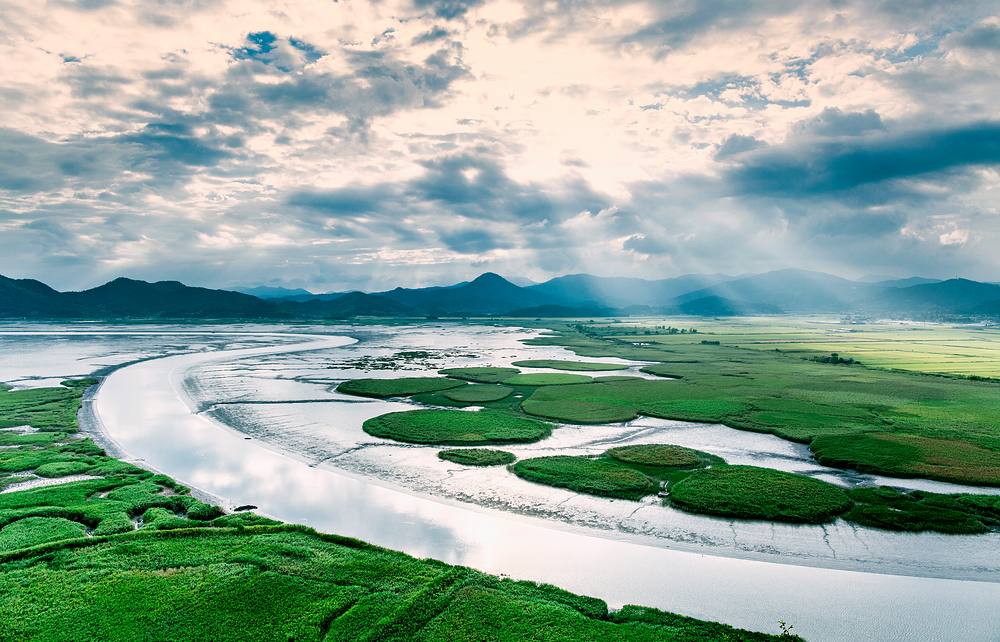
- The reed fields (갈대밭). Boardwalks run straight out into a sea of tall reeds that shift from green to gold through autumn. Walking through them at head height, with the wind moving everything at once, is the main event.
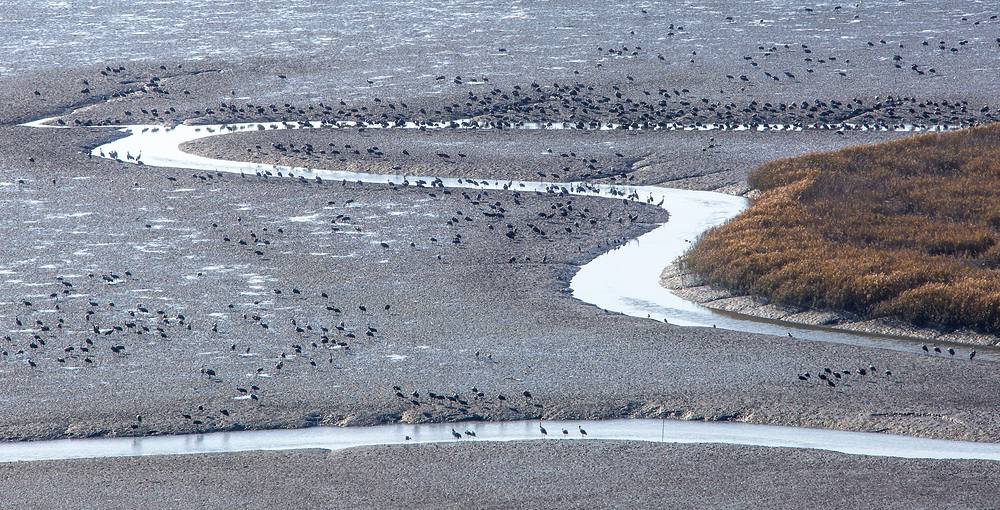
- The birds. The bay is a globally important wintering ground for migratory waterfowl, including rare hooded cranes. Winter mornings bring huge flocks, so bring a zoom lens.
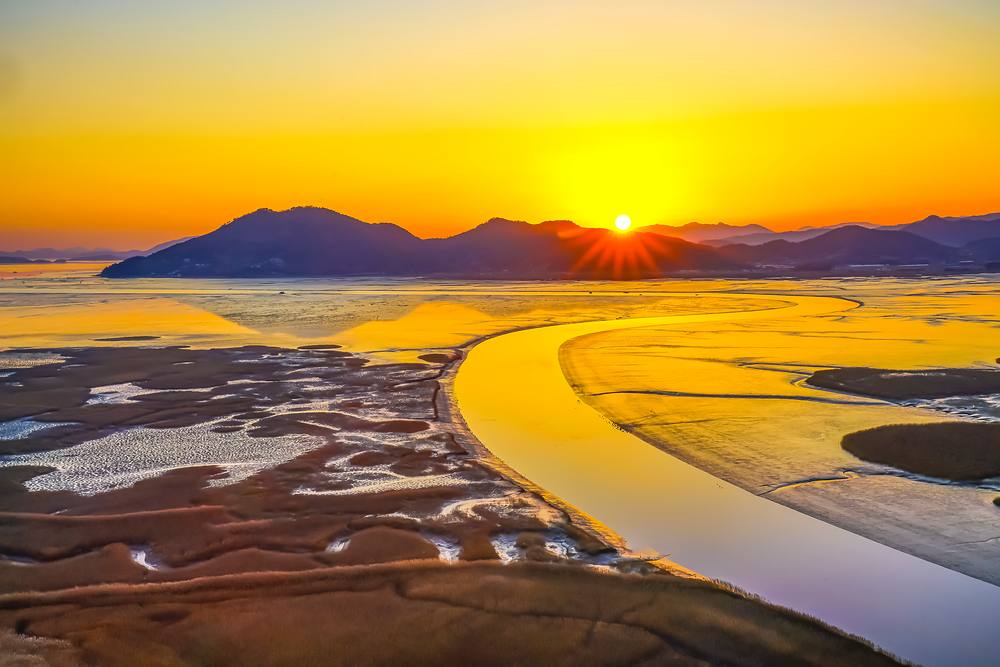
- The S-curve sunset. Climb the trail to Yongsan Observatory for the postcard view: the tidal channel curving in a perfect S through the reeds, mirror-bright at sunset. It's one of Korea's signature nature shots, and it earns the reputation.
Suncheonman National Garden
A short hop from the wetland is the Suncheonman National Garden (순천만국가정원), created for the 2013 garden expo and later named Korea's first national garden. It's huge and beautifully landscaped, built as a buffer to protect the wetland from the city, with theme gardens, a lake and wide lawns. A small eco-friendly PRT "Sky Cube" shuttle links the garden and the wetland area, so you can do both in one visit without a car.
Do the garden in the morning when it's fresh and quiet, then move to the wetland for the late-afternoon light and sunset. That order gives you the best of both.
Chasing the S-curve at Yongsan Observatory
The most famous view of Suncheon Bay is from above, not from the boardwalks. A trail climbs from the reserve up to the Yongsan Observatory, and from the top the tidal channel unspools in a long, glassy S-curve through the reeds. At sunset the whole scene turns copper and pink, the water mirrors the sky, and the reeds glow as if lit from within. It's the shot on every Korean postcard of the bay.
A few practical notes. The climb takes roughly 30–40 minutes at an easy pace on a maintained path, so wear real shoes and give yourself time. Aim to be up top about an hour before sunset, both for the light and to claim a spot on busy autumn weekends. Don't leave the moment the sun drops, either. The blue hour just after can be even better, when the reeds turn silver against a deepening sky.
Winter: one of the world's great crane grounds
Koreans make a very different trip here in the cold months. Suncheon Bay is a Ramsar-listed wetland of international importance and one of East Asia's key wintering grounds for migratory birds. From late autumn into winter, thousands arrive, most famously the elegant, endangered hooded crane, along with ducks, geese and spoonbills. Dawn, when the flocks lift off the mudflats in great waves, is the birdwatcher's prize.
If wildlife is your reason to come, bring binoculars or a zoom lens, keep your voice down, and stick to the boardwalks and hides. The whole reserve is managed to keep the birds undisturbed, which is why they keep returning year after year.
What to eat
Suncheon and the wider Jeolla region are known for some of the best food in Korea, thanks to a tradition of generous, flavor-packed cooking. Look for kkomak (cockles), a local specialty served seasoned and steamed, and a classic Jeolla-style baekban (a set meal that arrives with a small mountain of side dishes). You'll eat very well for very little.
When to go
- Autumn (Oct–Nov): peak season — the reeds turn gold and the light is perfect. The best all-round time.
- Winter (Dec–Feb): cold but spectacular for birdwatching, when the cranes and geese arrive in force.
- Spring–summer: green and lush, fewer crowds, though summer is hot and humid.
Getting there
Suncheon is easy to reach on the KTX from Seoul (Yongsan) in roughly three hours, then a short bus or taxi to the wetland and garden. It also sits close to Yeosu (about 30 minutes) and the Boseong green-tea fields, so it works better as one stop on a southwest-coast loop than as a there-and-back day trip.
Pair it into a southwest loop
Suncheon anchors one of Korea's most rewarding and least-touristed corners. Within an easy drive or short bus/train hop you can add:
- Yeosu (~30 min) — a coastal city famous for its glittering night harbor and maritime cable car.
- Boseong — hillsides of terraced green-tea fields, gorgeous in early summer.
- Naganeupseong Folk Village — a rare walled town of thatched-roof houses where people still live.
- Damyang (a little further) — bamboo forest and the metasequoia road.
Two or three unhurried days here beats a rushed day trip, and you'll barely hear another foreign accent.
Good to know
- Give it half a day minimum. The garden and wetland are large and spread out, and rushing spoils it.
- Combined tickets covering the garden, Sky Cube shuttle and wetland are usually the best value; check current options on arrival.
- Wear proper shoes. There's real walking, including the climb to Yongsan Observatory.
- Bring layers and water. The open marsh is exposed to sun and wind, with little shade on the boardwalks.
How to do it
- Base yourself in Suncheon or Yeosu for a night so you're not rushing the sunset.
- Buy a combined ticket where available to cover the National Garden, the Sky Cube shuttle and the wetland.
- Time the sunset. Check the day's sunset hour and start the Yongsan Observatory climb about an hour before.
- Pair the region. Suncheon Bay, Yeosu night views and the Boseong tea fields make a superb two-to-three-day southwest itinerary.
If you'd rather skip the logistics and driving, a guided nature day trip from the region bundles the garden, the wetland and the viewpoint with transport. It's an easy way to see it all without a car.
Find nature day trips & experiences
Give it a full afternoon and you'll see why Koreans keep coming back. Suncheon is a slow, spacious day, and a useful reminder that Korea is far more than its cities.