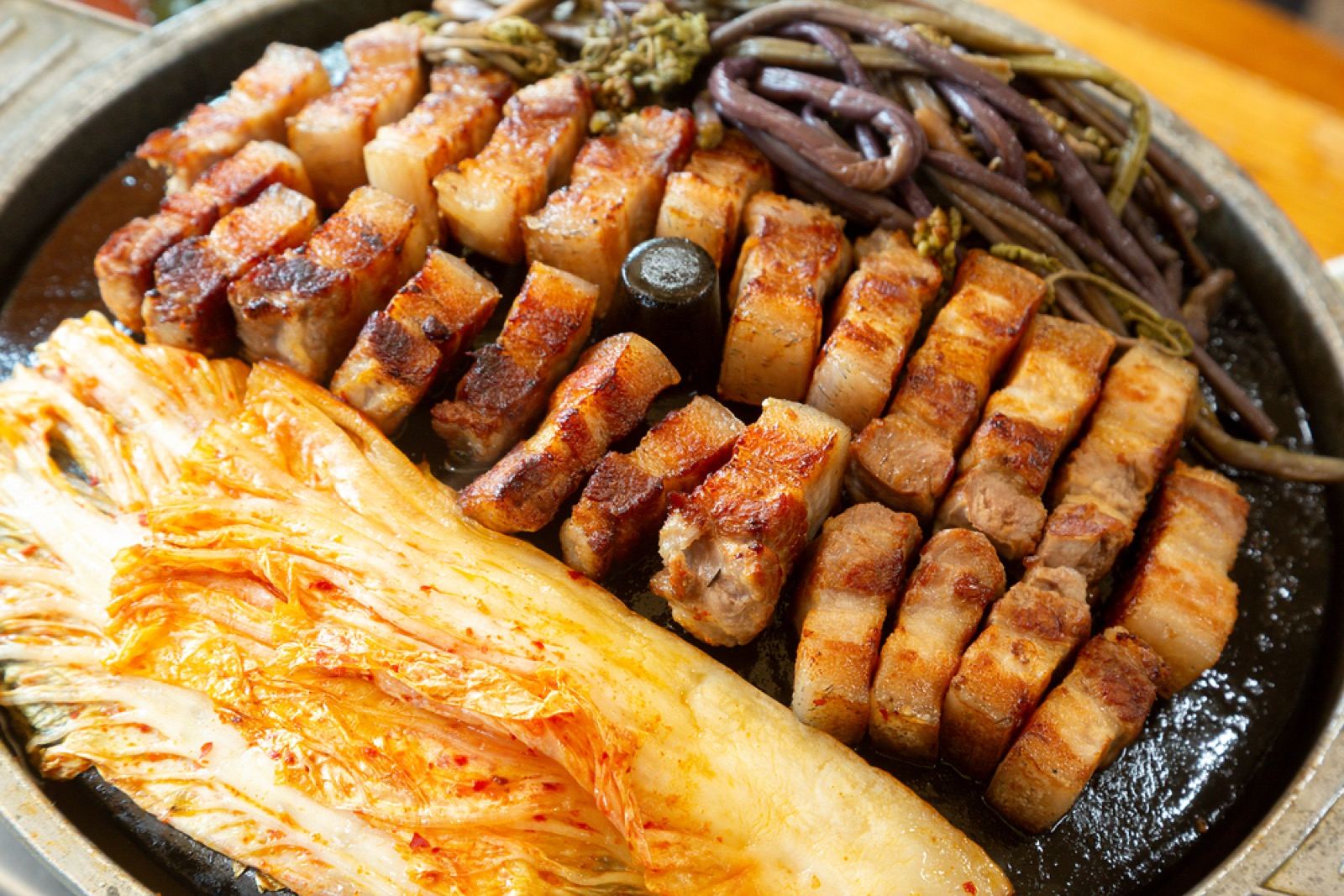
Jeju eats differently from the mainland: the star is heuk-dwaeji (black pork), backed by some of Korea's best seafood, much of it hand-gathered by the island's haenyeo divers. If you're on Jeju, this is the food to prioritize over anything you can get in Seoul. Here's the short list worth planning meals around, and how to order it without missing the good stuff.
Heuk-dwaeji: Jeju black pork
The island's prized black-skinned pigs give a pork that's richer and more deeply flavored than standard samgyeopsal, and locals grill it slower and hotter. Order ogyeopsal (five-layer belly) or moksal (collar), cooked at your table over charcoal.
- Dip it in meljeot, a salty anchovy sauce that's the traditional Jeju accompaniment (not the usual sesame-oil-and-salt) — it sounds odd, tastes right.
- Wrap it in lettuce and perilla with garlic and ssamjang, same as any Korean barbecue.
- Black-pork restaurants cluster in Jeju City's "Black Pork Street" (흑돼지 거리) near the old downtown, and around Seogwipo.
Expect a proper black-pork meal to cost more than mainland pork — you're paying for the breed and the island.
The sea: what the haenyeo bring up
Jeju's haenyeo — the free-diving women, many now elderly, who harvest the seabed without air tanks — are a UNESCO-listed cultural treasure, and their catch defines the island's seafood.
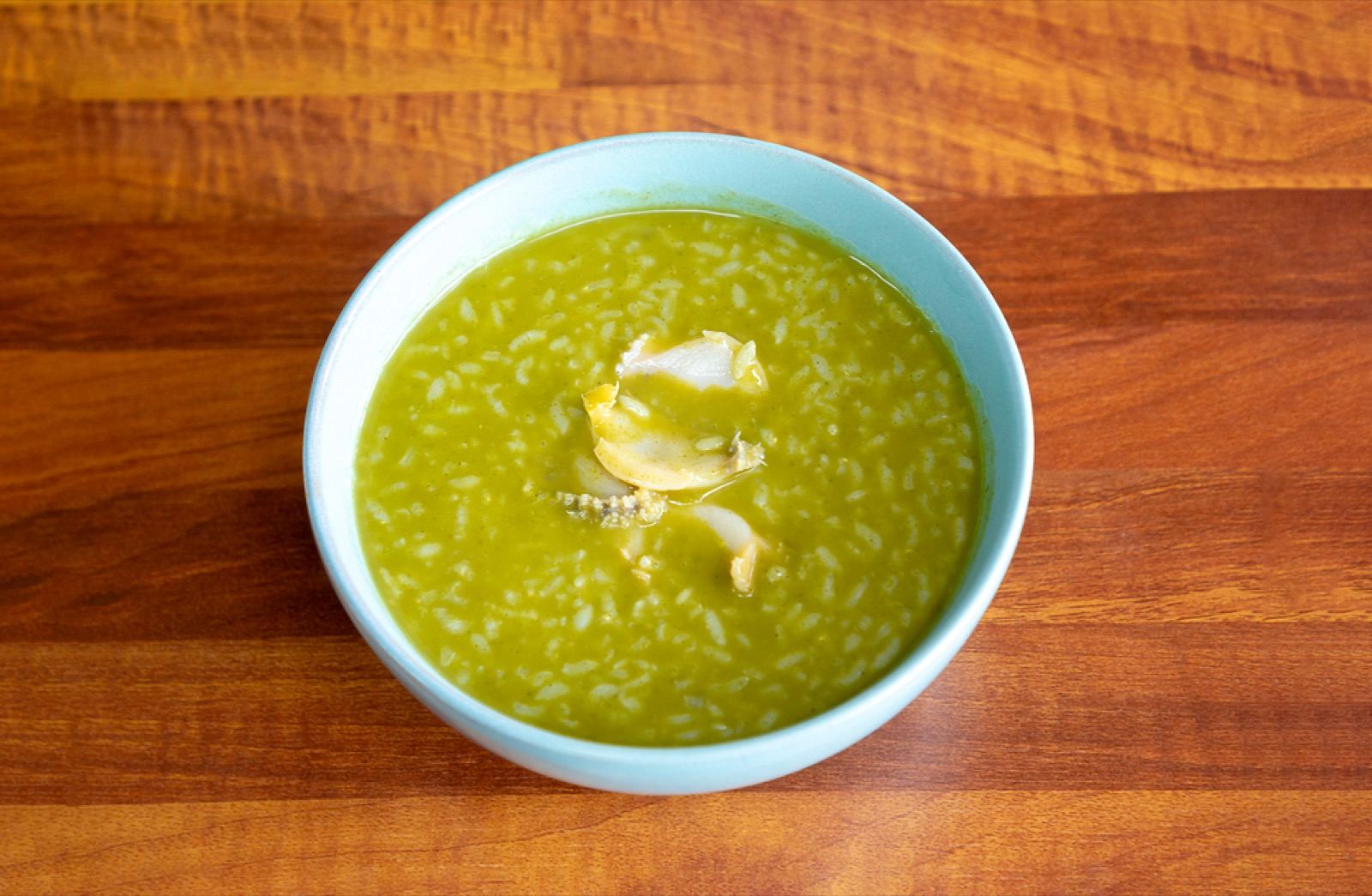
- Jeonbok-juk — abalone porridge, silky and green-tinged from the abalone, is the classic Jeju comfort dish and a great gentle introduction.
- Hoe (raw fish) and jeonbok (abalone) served fresh, sometimes grilled with butter.
- Galchi-jorim / gui — cutlassfish braised in spicy sauce or simply grilled; a Jeju staple.
- Seongge (sea urchin) and conch stalls near the harbors and the haenyeo huts let you eat it steps from where it was gathered.
A couple more things to try
- Gogi-guksu — pork-broth noodles topped with slices of that black pork; the island's everyday bowl.
- Hallabong / cheonhyehyang — Jeju's sweet, easy-peel citrus, and every dessert made from them, from cakes to fresh juice.
- Omegi-tteok and peanut treats for the sweet tooth.
Book a black-pork dinner and eat porridge or noodles for lunch, rather than doubling up on heavy meals. And try the meljeot dip at least once — declining it is the tourist move.
Where and how
- Jeju City's Black Pork Street and the harbor seafood spots are the easy anchors; Seogwipo has its own strong scene on the south coast.
- For the freshest seafood, eat near the harbors and haenyeo areas on the east and south coasts.
- Popular black-pork restaurants fill up at dinner — go early or expect a wait.
How to do it
- Line up one proper black-pork dinner at a charcoal place in Jeju City or Seogwipo; order ogyeopsal and try the meljeot.
- Have jeonbok-juk or gogi-guksu for a lighter meal.
- Eat seafood near a harbor where the haenyeo land their catch.
- Finish with hallabong something for dessert.
- Getting around Jeju for these spots is easiest by car or booked tour, since the best places are spread across the island.
Sorting Jeju transport or a food-focused tour in advance means you spend the trip eating, not figuring out logistics.
Find Jeju food tours & experiences
Prioritize the black pork and whatever came out of the sea that morning, and Jeju turns into one of the best eating trips in the country.