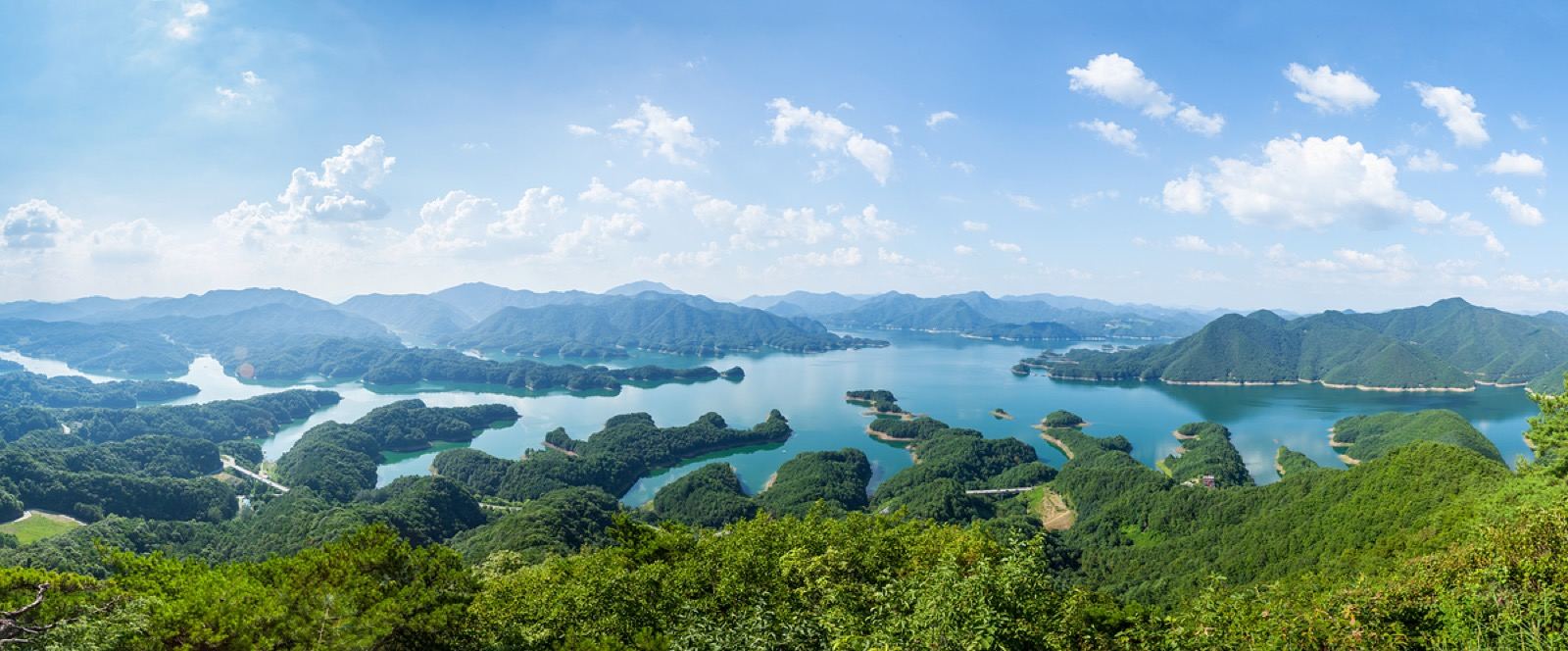
Chungju, in landlocked Chungcheongbuk-do, is built around a vast man-made lake of forested islands and fjord-like inlets, paired with Jungangtap — the tallest surviving Unified Silla stone pagoda — and Korea's most famous apples. Ride a ferry across the lake (the scenic run toward Danyang is the highlight), visit the riverside pagoda park, and eat apples and olgaengi-guk (river-snail soup). October is the best month. Reach it by train or bus (1.5–2 hours from Seoul), and a car helps.
Chungju, in landlocked Chungcheongbuk-do, is built around a vast man-made lake of forested islands and fjord-like inlets — and pairs lake cruises with a national-treasure stone pagoda and Korea's most famous apples. It's a quiet inland escape that sees almost no foreign visitors, which is exactly why it's worth a look. Here's what to do.
What to do in Chungju, at a glance
| Sight | What it is | Best for |
|---|---|---|
| Chungju Lake | Huge reservoir, ferry cruises | Scenery, autumn color |
| Jungangtap | Tallest Silla stone pagoda | Riverside history |
| Apple orchards | Korea's apple country | Autumn harvest |
| Suanbo Hot Springs | Old spa town nearby | A soak |
| Tangeumdae | Riverside cliff battle park | A short walk |
Chungju Lake (Chungjuho)
The lake is the star: a big reservoir created by Chungju Dam, its water snaking between steep green hills. The best way to see it is from the water.
- Ferry cruises run across the lake, with the scenic stretch toward Danyang's Dodamsambong peaks a highlight — you can actually ride the ferry between Chungju and Danyang in season.
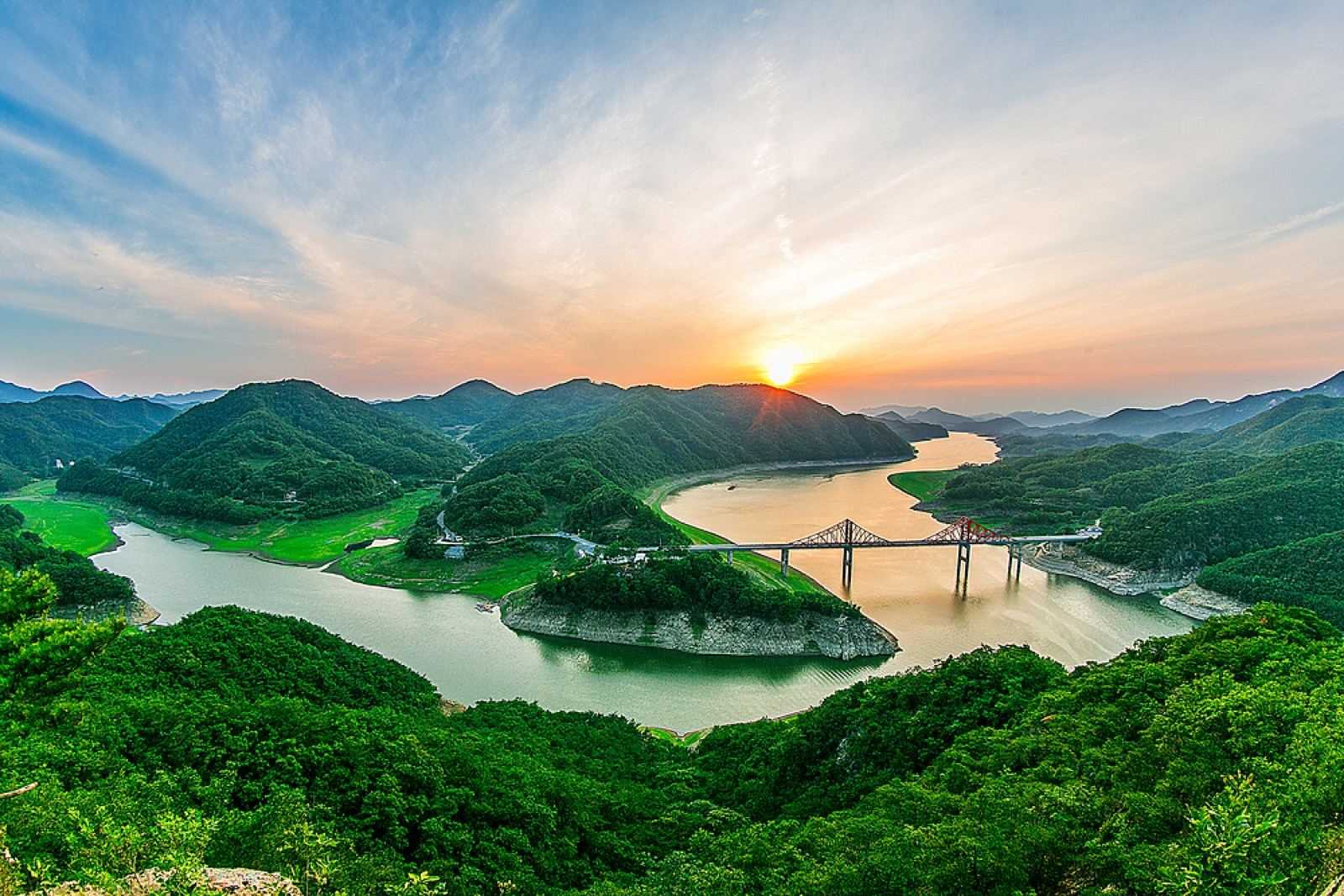
- Viewpoints and suspension bridges around the shore give big panoramas; the hilltop lookouts near the dam are worth the short climb.
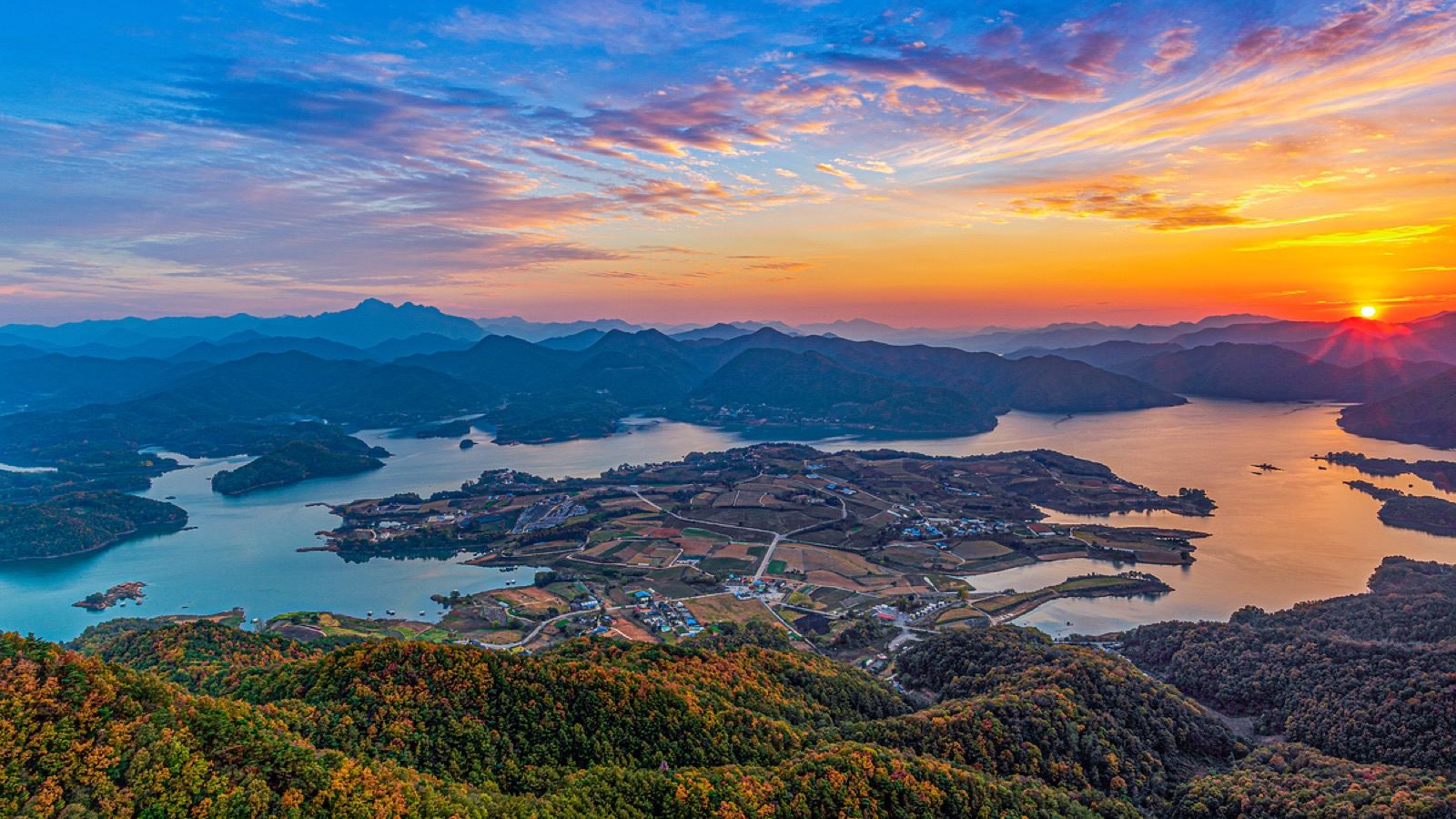
- The water is at its best framed by autumn color.
Jungang Tap: the pagoda at the country's center
Jungangtap (Tappyeongni Seven-Story Stone Pagoda) is the tallest surviving Unified Silla stone pagoda and a national treasure, standing in a riverside park once considered the geographic center of the country. It's a quiet, photogenic stop, lovely in autumn, and ringed by a sculpture park and walking paths.
What to eat: apples, and more
Chungju is Korea's apple country, and autumn is harvest season — roadside stands, orchard visits and apple everything (juice, pie, even apple makgeolli). The region is also known for olgaengi-guk, a hearty river-snail soup that's a genuine local specialty and better than it sounds.
Time a visit for October: the apples are in, the lake is framed in color, and the ferry runs. It's the single best month to come.
What else is around
- Suanbo Hot Springs — an old spa town nearby for a soak.
- Tangeumdae — a riverside cliff park tied to a famous 16th-century battle.
- Chungju Dam — the dam itself has an observation area.
- It pairs naturally with Danyang (just up the lake) for a two-town Chungbuk trip.
Getting to Chungju
- Train: a Mugunghwa or KTX-Eum service reaches Chungju from Seoul (Cheongnyangni) in roughly 1.5–2 hours as of 2026.
- Bus: intercity buses run from Seoul's Dong Seoul and Express terminals.
- Sights are spread out, so a rental car (or planned local buses) helps a lot.
How to do it
- Train or bus to Chungju and stay a night if you can.
- Take a lake ferry — the Danyang-direction run is the scenic one.
- Visit Jungangtap and the riverside park.
- Eat apples and olgaengi-guk, and grab orchard produce in autumn.
- Pair with Danyang up the lake for a fuller trip.
Having your rail or bus connections sorted ahead makes an inland Chungju trip effortless.
Sort trains & passes for your Korea trip
Frequently asked questions
Is Chungju worth visiting?
Yes, for a quiet inland escape. Chungju is built around a vast scenic lake with ferry cruises, plus a national-treasure Silla pagoda and Korea's most famous apples. It sees almost no foreign visitors, which is a big part of the appeal.
What is there to do at Chungju Lake?
Take a ferry cruise across the lake — the scenic run toward Danyang's Dodamsambong peaks is the highlight — and visit the shoreline viewpoints and suspension bridges. It's at its best framed by autumn foliage.
What is Jungangtap?
Jungangtap (the Tappyeongni Seven-Story Stone Pagoda) is the tallest surviving Unified Silla stone pagoda and a national treasure, standing in a riverside park once considered the geographic center of the country. It's a quiet, photogenic stop ringed by a sculpture park.
How do you get to Chungju from Seoul?
Take a Mugunghwa or KTX-Eum train from Seoul's Cheongnyangni in roughly 1.5–2 hours, or an intercity bus from the Dong Seoul or Express terminals. The sights are spread out, so a rental car or planned local buses help a lot.
What food is Chungju known for?
Apples — Chungju is Korea's apple country, with orchards, roadside stands and apple everything (juice, pie, even apple makgeolli), especially in autumn. The region is also known for olgaengi-guk, a hearty river-snail soup.
When is the best time to visit Chungju?
October is the best month — the apples are in, the lake is framed in autumn color, and the ferries run. It pairs naturally with Danyang up the lake for a fuller two-town Chungbuk trip.
Come for the lake and the quiet. Chungju is the kind of uncrowded inland escape most visitors never think to make, and that's the point.