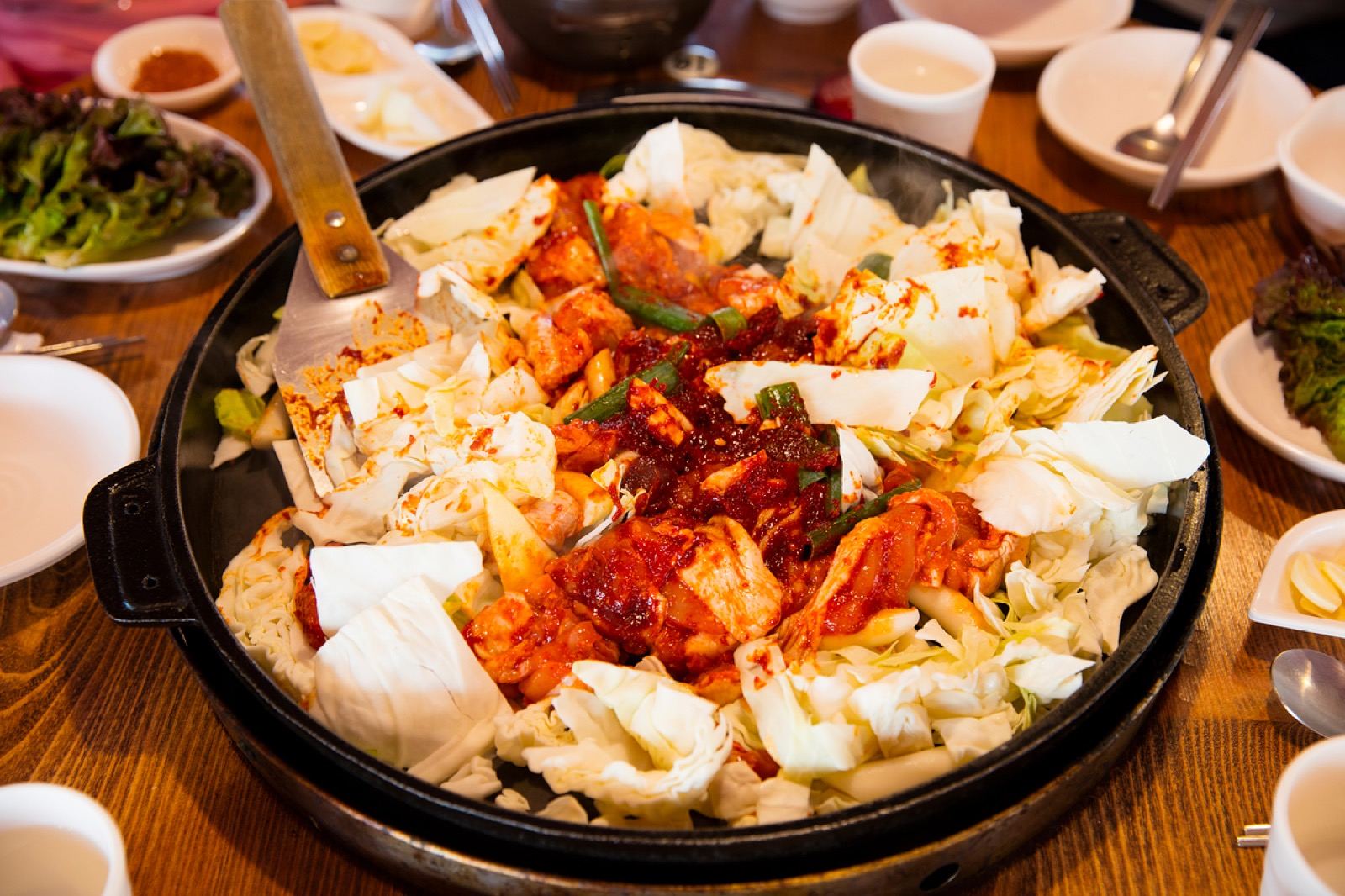
Dakgalbi is Chuncheon's signature dish — chicken thigh marinated in a sweet-spicy gochujang sauce and stir-fried at your table with cabbage, sweet potato, rice cake and perilla leaf. It's the reason a lot of Koreans get on the train to this lakeside city an hour east of Seoul, and eaten where it was invented, it genuinely is better. Here's how to do it right.
What is dakgalbi, exactly?
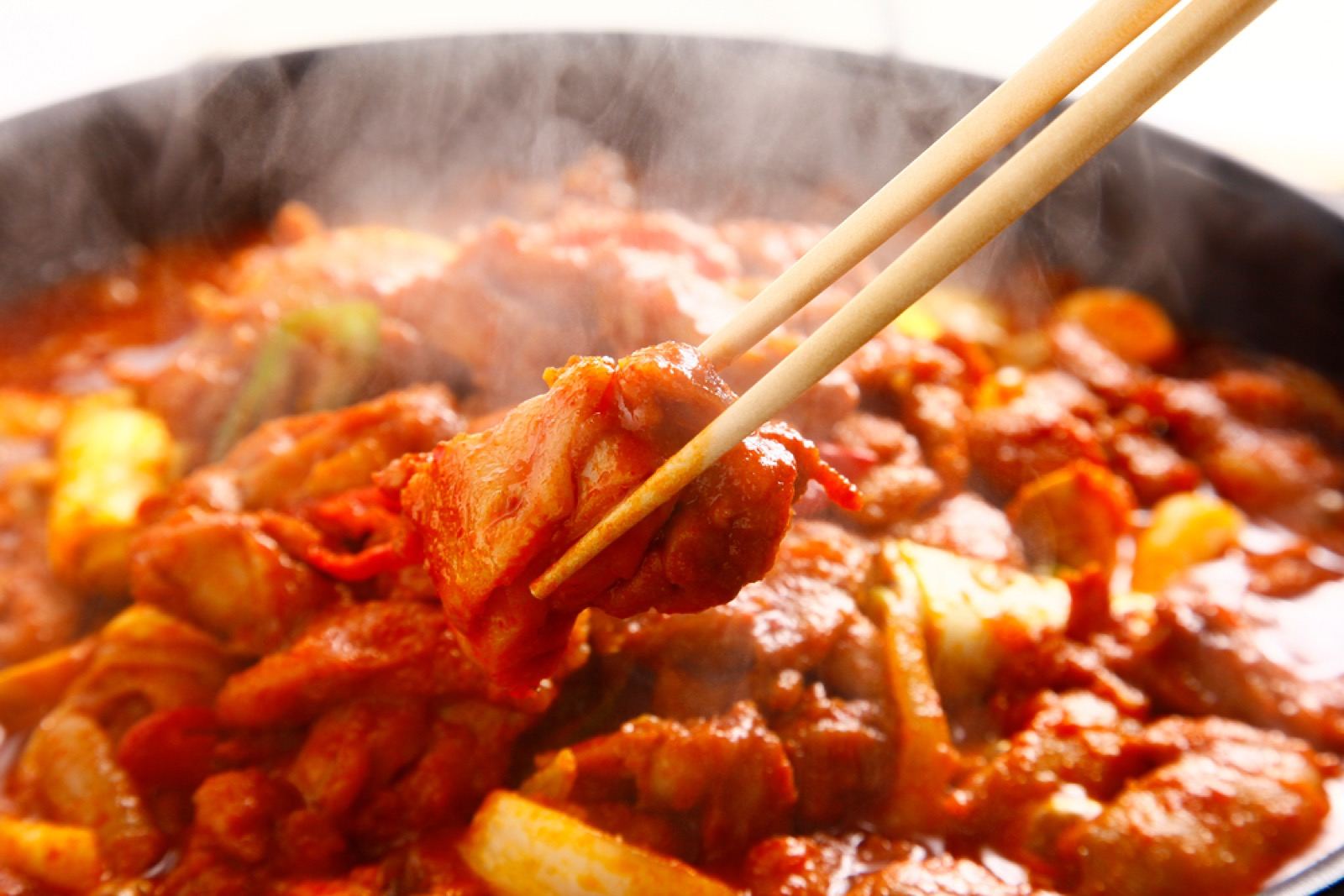
A communal tabletop stir-fry. Raw marinated chicken and vegetables arrive piled in a big round iron pan set into your table, and either you or the staff cook it down over high heat, stirring, until the chicken is charred at the edges and the sauce clings to everything. It's spicy, a little sweet, and built for sharing over drinks.
Chuncheon has cooked it this way since the 1960s, when it was cheap food for soldiers and students. The city leaned in, and now a whole alley is dedicated to it.
Where to eat it in Chuncheon
Head to Myeongdong Dakgalbi Alley (닭갈비 골목) in the city center, a short lane packed with restaurants that have been at it for decades. Most are large, busy, and used to feeding groups. Pick one with a queue of locals and you won't go wrong. There's no single "best" — the recipe is fairly standard across the alley, so atmosphere and wait time matter more than agonizing over which door.
- Minimum order is usually two portions, so it's a dish for two or more.
- Expect around 13,000–15,000 won per portion as of 2026 — check the current price.
- Many places do a cheese option (a molten moat of it around the pan) and a non-spicy soy version for kids.
The move everyone gets wrong
Save room for the bokkeumbap. When the chicken is nearly gone, the staff will offer to fry rice (and often kimchi, seaweed and egg) in the leftover sauce right there in the pan, scraping up all the caramelized bits. This fried-rice finish is, for many people, the best part of the meal. Skipping it is the rookie mistake. Order it before you're completely full.
Dakgalbi is a two-act meal: the stir-fry, then the fried rice in the same pan. Pace yourself so you can do both — the second act is the one you'll remember.
What else to pair it with
- Makguksu — cold buckwheat noodles, Chuncheon's other specialty, and the classic cooling counterpoint to the spice. Order a bowl to share.
- Soju or beer — this is drinking food, plainly.
- Dongchimi (radish water kimchi) if it's offered; the cold broth resets your palate.
Getting to Chuncheon
Chuncheon is an easy day trip or overnight from Seoul, and the journey is half the appeal:
- ITX-Cheongchun train from Seoul (Yongsan/Cheongnyangni) reaches Chuncheon in about an hour to 80 minutes as of 2026 — fast, cheap and scenic along the Bukhan River.
- The Gyeongchun subway line is slower but even cheaper if you're not in a hurry.
- Once there, the dakgalbi alley is a short taxi or bus ride from Chuncheon Station.
Pair the meal with Nami Island, the lake ferries, or a walk along Uiam Lake to make a full day of it.
How to do it
- Take the ITX-Cheongchun from Seoul and aim to arrive hungry around lunch or early dinner.
- Go to Myeongdong Dakgalbi Alley and pick a busy spot; order two portions minimum (add cheese if you like it).
- Let it cook down properly — you want char, not a stew.
- Order the fried rice before the chicken runs out.
- Add a shared bowl of makguksu to cool the heat.
Sorting your train ahead of time on a busy weekend keeps this a smooth, low-stress trip rather than a platform scramble.
Sort trains & passes for your Korea trip
Eat it where it was invented, do both acts, and you'll understand why Koreans treat a bowl of Chuncheon dakgalbi as a destination in itself.